
Jesus: Our Prophet

Pastor Mike
Woman in pajamas, using a phone, sitting in a small room. The room has a fridge, TV, and window.

A boyfriend and girlfriend enter a church. After a ceremony, they leave husband and wife. What happened? Words happened. A soldier enters a change of command ceremony, but leaves with a whole new set of responsibilities and honors conferred upon her. What happened? Words happened. When a pastor pronounces a couple man and wife, or an officer pronounces a soldier as the new leader, a new reality is being constituted – and simply with words! Words clearly have tremendous power.


But sometimes they fail, don’t they? You told your son to finish his game and come sit at the table. He did not. What happened? Were your words not enough? You poured out your feelings with words to your best friend, hoping he would give you sympathy, but instead reacted coldly. Was there something wrong with your words? Not necessarily. But sometimes words fail because of the hearer. 


And no one knew this better than the prophet Moses. As God’s chosen leader for the Israelites, time and again he saw them listen to God one minute only to abandon God in the next. At the base of Mt. Sinai (aka Mt. Horeb) Moses watched the Israelites fling themselves headlong into disgusting idolatry only moments after receiving instruction straight from God’s mouth. God did not overlook that incident. He punished the idolatrous Israelites swiftly and terrifyingly – so terrifyingly that they begged Moses to stay between them and God like a scrawny kid hiding behind a bigger kid. 


Moses stayed in his position as mediator between God and Israel, as a prophet whom God would give his words to bestow. So Moses led with words. Words were the tool that God gave Moses to guide Israel. That’s the job of a prophet, after all. Moses tells the Israelites to expect this situation to continue: 


15 The Lord your God will raise up for you a prophet like me from among you, from your fellow Israelites. You must listen to him. 16 For this is what you asked of the Lord your God at Horeb on the day of the assembly when you said, “Let us not hear the voice of the Lord our God nor see this great fire anymore, or we will die.”


17 The Lord said to me: “What they say is good. 18 I will raise up for them a prophet like you from among their fellow Israelites, and I will put my words in his mouth. He will tell them everything I command him. 19 I myself will call to account anyone who does not listen to my words that the prophet speaks in my name. 


Like Moses, God would send more prophets. You may know some of their names: Elijah and Elisha, Isaiah, Jeremiah, Hosea, Amos, Daniel, Ezekiel. Each of them came with powerful words. Each of them came with the message God had given them to speak. Just like Moses, each of them experienced the bitter disappointment of their countrymen despising the message. They were laughed at, threatened, beaten, pursued within an inch of their lives – and many of them martyred for that powerful word. Time and time again, the hearers are the weak link. 


Is that the way it’s going to be this Christmas? Are we going to be the weak link in communication again? I say “again,” because even in my most earnest moments of wanting to hear God’s Word and take his message to my heart, that same heart struggles to understand and put it into practice. Each year, you and I both struggle to take home the true meaning of Christmas – that it is more than just a busier time of year and a weirder time at church. With how hard-headed the human race can be, it’s surprising that God keeps “trying” with us; keeps speaking to us. If the Christmases before are any indication, this Christmas is going to be just as much of a challenge to my hardheadedness to hear the meaning of it all. 


However, consider this: in a wedding, if the groom-to-be is daydreaming during the pronouncement of marriage, does he leave that church a single man? No. If a soldier sneezes during the words that confer her new command upon her, does she leave unemployed? No! The power of the words remain, because in that moment, their power doesn’t depend on the hearer. It’s when you’re commanding your kids to get off the Xbox that they can choose not to listen. When words are used to declare a new reality, though… that’s different. These verses aren’t just speaking about the long line of prophets to come. They are ultimately true, and true in the fullest sense, in Jesus Christ. 


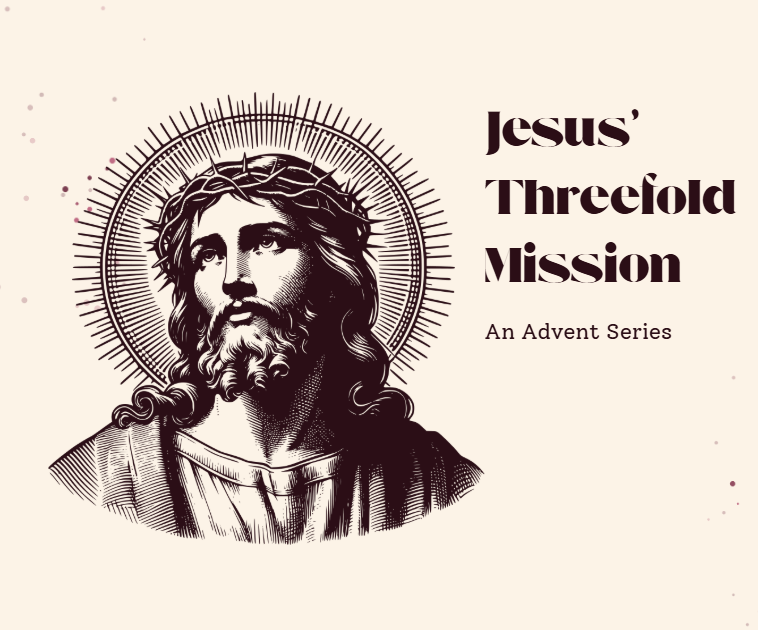
As the Son of God in human flesh, Christ was set apart as a prophet. God the Father “raised him up” from the same stock as the rest of the human race. He is like us in every way, yet without sin. He is our empathetic Savior, in the trenches with us. But unlike Isaiah, Amos, Elisha, Jeremiah, or Ezekiel – men called out of other occupations in order to become prophets of God – this prophet is born into his prophetic ministry. Even the circumstances of his birth declare a powerful prophetic message: Your God comes to you not in rage or vengeance, but in gentle humility. 


This is a message worth listening to. And the way that we “listen” is both by hearing what Jesus has to say and watching what he does, since his actions bear witness to his message. His actions speak just as loudly as his words. And his message is not, “Do better,” or “Get your act together.” We already had that message! And we already terrified by its implications: “We can’t do better, we can’t get our act together, so what will happen to us?” 


But Jesus arrives in the manger on Christmas Eve as the Living Word, to communicate a new reality – one better than a pastor pronouncing over a couple that now they are married, or even that a soldier now has her dream job. Jesus arrives as a prophet, as a living and breathing prophetic message that, “God and sinners are reconciled.” He declares it with his words, speaking “Your sins are forgiven.” He proclaims it with his actions. 


Jesus did not come only to command. Jesus came to declare: good news to the poor; freedom for the captives; release from darkness for the prisoners; to proclaim the year of the Lord’s favor; to comfort all who mourn (Isaiah 61:1-2). He came to speak the new reality of grace and peace into being. 


And while Jesus’ living messages of our need for salvation, and the certainty of God’s grace are not fully different from the prophets of the Old Testament, he does speak in a unique way. Instead of a man given the words by God to speak to us, he speaks as God himself. He says things like, “Truly I say to you…” He speaks not just about human kingdoms but a heavenly kingdom, revealing to us through many parables what the kingdom of heaven is – speaking as someone who personally knows! 


Jesus comes to show us why we really matter to God, why we know he is truly with us, and how we know we’re saved. In the end, we are saved by his ultimate declaration from the cross, “It is finished.” Those powerful words sealed your fate for all eternity. You are his, he has declared it. He was born so that he could speak these words. With the power of God himself, speaking through a human mouth, he has declared to you the everlasting peace of God’s unconditional grace. 


That means that any other human mouth that declares the same thing does the same thing. You have in your possession this powerful word. You have in your heart, mind, and soul the powerful declaration to forgive sins. Jesus even says that when you proclaim the same message of grace and peace, he is declaring it through you. When you forgive sins, he forgives them. When you proclaim comforting release from the darkness of guilt and shame, he proclaims it through you. Who wouldn’t want to listen to a sweet message such as this? 


And why wouldn’t we celebrate the moment the eternal God was born into our human race in order to speak to us this blissful comfort of the gospel? So maybe remembering the reason for the season won’t be that hard at all. In fact, Jesus’ word has a way of powerfully piercing through our stubbornness and getting into our hearts. Rest assured he can and will do so again through the gospel this Christmas. 


Pastor Mike Cherney 

Woman in light blue jacket and man in white shirt, seated on teal chairs, engaged in a conversation.
By Pastor Mike November 14, 2025
We share Jesus in order to leave an impact. After all, he is not only our Savior, but he is the Savior of our conversation partner as well!
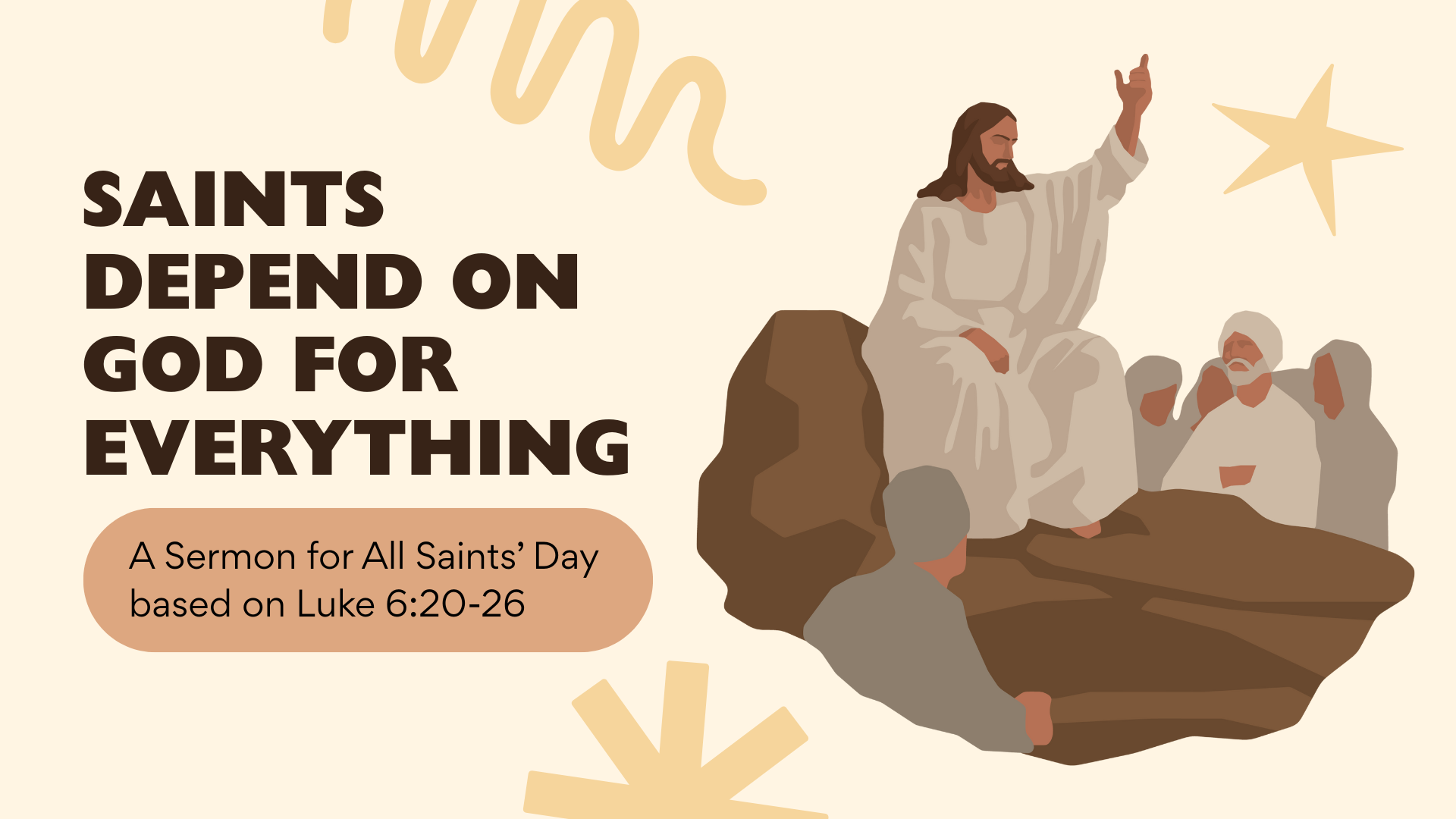
Jesus preaching to followers. Text:
By Pastor Mike November 4, 2025
20 Looking at his disciples, he said: “Blessed are you who are poor, for yours is the kingdom of God. 21 Blessed are you who hunger now, for you will be satisfied. Blessed are you who weep now, for you will laugh. 22 Blessed are you when people hate you, when they exclude you and insult you and reject your name as evil, because of the Son of Man. 23 “Rejoice in that day and leap for joy, because great is your reward in heaven. For that is how their ancestors treated the prophets. 24 “But woe to you who are rich, for you have already received your comfort. 25 Woe to you who are well fed now, for you will go hungry. Woe to you who laugh now, for you will mourn and weep. 26 Woe to you when everyone speaks well of you, for that is how their ancestors treated the false prophets.
By Pastor Mike October 25, 2025
The following blog post was written as part of Pastor Cherney’s master’s studies in Clinical Mental Health Counseling. Can you already notice the irony? When you read the title of this post, I’m sure your mind swarmed with every piece of advice you’ve gotten about how to parent teens through their use of screens.
By Pastor Mike June 27, 2025
There! Now that we’ve cleared up all the misunderstandings above giving an offering, we are all ready to worship God in this way with regularity and joy! I’m just kidding. We’ve only touched on a few of the false conceptions that are possible. Because giving is an act of sanctification – a fruit of faith, thankfully offered to God in response to the gospel – it is something to “grow into.” There may still be misgivings, questions, and reluctance. Some readers may have been seriously hurt by church leaders who prevailed too strongly upon their debit cards and bank accounts. To those, one blog post will not be sufficient to restore the act of giving to its Scriptural, rightful place. For others, giving was never properly explained as a fruit of faith, not an act that earns goodness from God. To those, I pray this discussion has been helpful. I write this post as one who is himself growing in the act of giving. May God continue to shape our understanding of how to use our gifts to his glory. Giving to God is not a science. The act of giving looks differently among Christians, just as their acts of service and fruits of faith look differently. There are no hard-and-fast equations. We can’t say that giving an offering ensures that you’ll get rich in return (maybe God will choose to bless you in this way, maybe not). We can’t say that giving will come easy once you have a more stable income (your sinful nature will likely resist no matter how much income you have). We can’t say that you should never feel concerned or self-critical over your giving (is there ever an amount that will properly express your thankfulness to God?). So, I would say that giving is much more of an art. After taking in all of Scripture’s guidance about how to approach the act of giving, we proceed using our best judgment. We start with the gospel, meditating on what wonderful things God has done for us through Jesus Christ. We then look at the gifts God has given to us: our finances, our time, our personality gifts. We envision how to respond to God’s goodness with these gifts. While there are some acts of giving that will look very similar among various Christians (for example, we all give of our time when we attend worship and Bible study together), each one of us goes through our own process of deciding how best to respond to the gospel with our gifts. We submit our hearts to God for audit, recognizing that there are often mixed motives within them (Psalm 139:23-24). We rely on God to work within us and through us even as we thank him (Philippians 2:13). After all, this is about our relationship with God – not about securing it for ourselves with offerings, because it is already secure in Christ. Rather, it is about living out a relationship of worship with God, expressing to him and to the world what he means to us. To that end, let’s close with these verses from Hebrews: “Through Jesus, therefore, let us continually offer to God a sacrifice of praise—the fruit of lips that openly profess his name. And do not forget to do good and to share with others, for with such sacrifices God is pleased.” (Hebrews 13:15-16) God bless you as you find joy in God’s pleasure over you for Christ’s sake, and as you respond to this gospel with thanksgiving! Pastor Mike Cherney 
By Pastor Mike June 27, 2025
This is a very common conception of the offering, and up to this point it might appear that we also teach the tithe – the practice of giving one tenth of one’s goods as a matter of the law, and not to deviate from that percentage. This is commanded to the Old Testament Israelites in passages such as Leviticus 27:30. But Christ has set us free from the letter of the law (Colossians 2:14, Colossians 2:16-17, Galatians 4:4-5). When the New Testament commands the act of giving, percentages are not mentioned. What is mentioned, however, is that giving be proportionate (1 Corinthians 16:2), generous (2 Corinthians 9:6), done with joy (2 Corinthians 9:7), and a good work sprung from trust in the Lord (2 Corinthians 9:8-11). This is not as specific as the tithe rule. It requires one to spend time reasoning out what a manageable and reasonable gift looks like for them, while still reflecting the thanksgiving and generosity that they wish to communicate in response to the gospel. In many households, ten percent remains a useful benchmark for giving, but must not be treated as a law. Some households will not be able to afford that amount. For others, “proportionate” giving means giving much more than ten percent. It is a lot easier for church leaders to make hard-and-fast rules to “keep people in line,” rather than offer these general encouragements. However, if we remember that giving is an act of worship in response to the gospel, we will avoid strictly laying down ground rules that Scripture no longer enforces. Instead, we will focus on sharing the beautiful gospel with our members, friends, and community, and allow the Holy Spirit to create and nurture the gospel joy that inspires acts of thanksgiving. Likewise, if someone’s giving is “off-kilter,” we don’t want to address their giving with the desire that they “get those numbers up.” That would convey that our worth in God’s family comes from our works. Instead, we express concern over their connection to the gospel, and nurture their relationship with Jesus through Word and Sacrament. Then, and only then, can we discuss what a proper response to the gospel looks like in our giving. Go to next post in this series
By Pastor Mike June 27, 2025
This misunderstanding is based partly on truth, but becomes misguided when it is treated as the main issue. Like millions of churches across the world, our church is a not-for-profit organization. We rely solely on the offerings of members to keep the doors open and the air conditioner running. It would stand to reason, then, that we should encourage giving so that the work of the church can continue, don’t you think? After all, the Levites (ministers in the tabernacle and temple worship of the Old Testament) were to rely on the offerings of the rest of the tribes of Israel for their livelihood (Numbers 18:21). The Apostle Paul encouraged offerings so that Christians in dire financial need could be provided for (1 Corinthians 16:1-2). There is a practical side to giving an offering. However, this should not be divorced from the attitude of thankful worship described above. Above all, giving an offering is a fruit of faith inspired by thankfulness in response to the infinite grace of God. It is an act of worship. The opportunity to praise God in this way does not cease when the church’s bills are paid off any more than your need to come to worship services ceases when church attendance is up. Go to next post in this series
Show More